





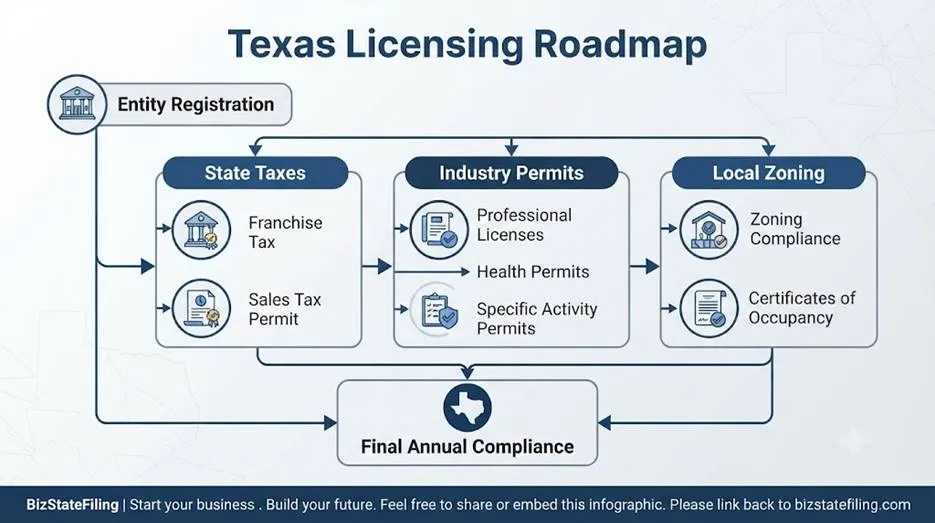
Launching a commercial enterprise in the state of Texas is a significant milestone that requires a deep understanding of the local regulatory environment. Unlike many other states that utilize a single master business license, Texas operates under a decentralized system where compliance is dictated by industry, business structure, and local municipal requirements. Understanding these layers is essential for any founder who wants to ensure their operations remain fully compliant from the start.
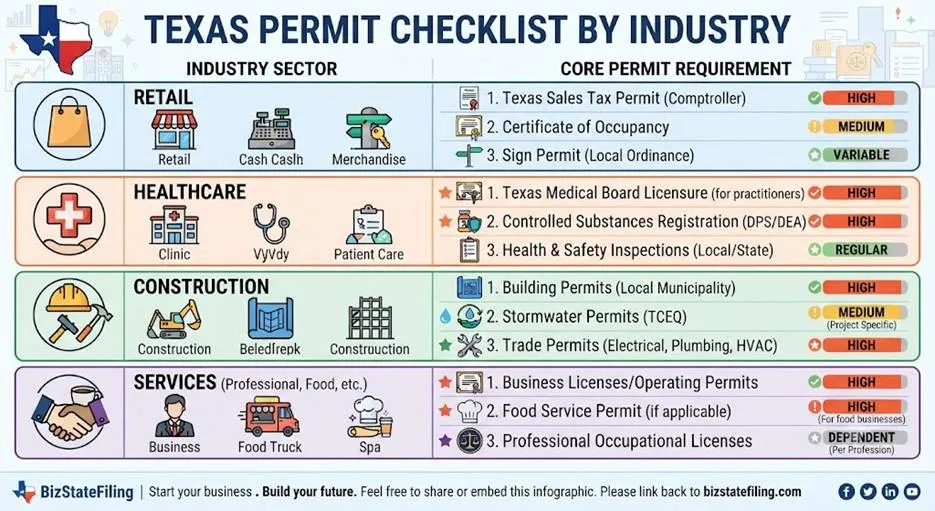
A comprehensive guide to navigating business licenses in Texas emphasizes that while the state does not have a single, general state-level business license, various specific industries, occupations, and local jurisdictions require targeted permits and authorizations to operate legally. Entrepreneurs must determine their specific municipal, county, and state regulatory obligations based on their industry sector, business structure, and physical or online location to ensure complete legal compliance before opening their doors.
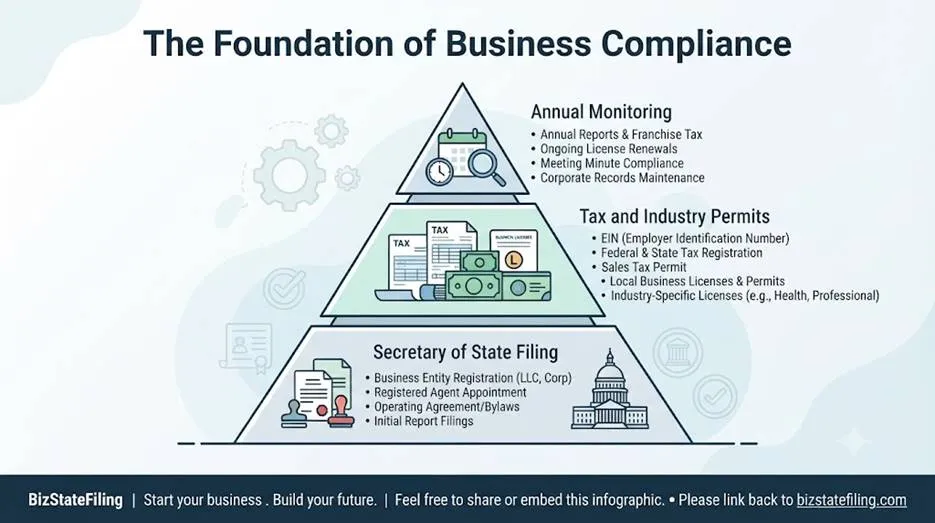
The Foundations of Texas Business Compliance
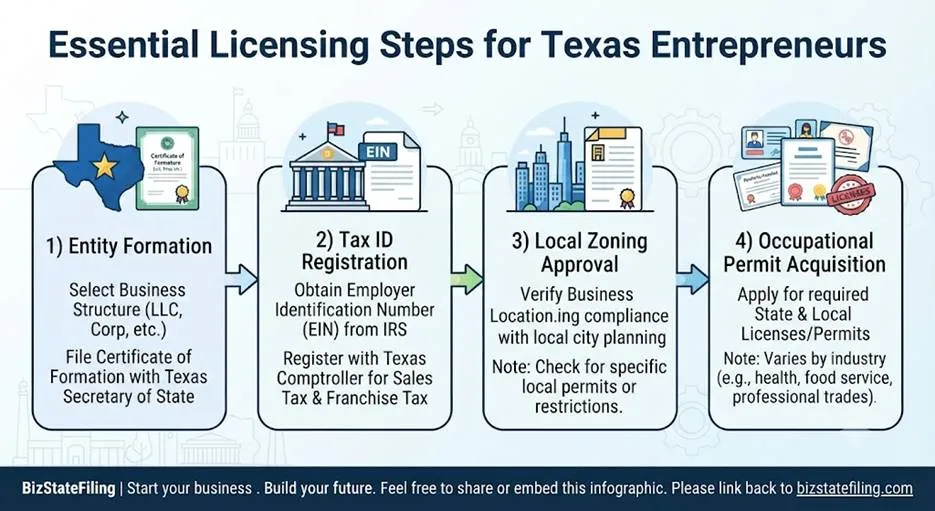
The Texas regulatory landscape is designed to foster an environment of growth, but this flexibility shifts the responsibility onto the founder to identify and secure necessary permits. Before a business can open its doors, the owner must navigate various state and local mandates. A primary step for many is to register a new business entity to create a legal shield for their personal assets. If you are starting this journey, you can start an LLC online through established registration channels to ensure your company is structured correctly from day one.
Compliance is not a onetime event but a continuous process. Founders must consider how their specific business activities trigger different registration needs. The state of Texas provides broad guidance, but local ordinances often dictate the specific operational permits required for your storefront or office space. Utilizing a professional business registration platform early in your journey can help prevent oversight regarding mandatory filings.
To manage the administrative burden of tracking multiple state and municipal deadlines, many founders rely on visual time management utilities to organize their operations. This prevents the stress of last minute filing and keeps the business running smoothly.
Regulatory Categorization and Operational Footprint
Because there is no universal permit in Texas, businesses must be categorized by their operational footprint. Some businesses interact with the public, while others operate in highly regulated sectors like healthcare or finance. The following table provides a comprehensive overview of how different sectors interface with Texas state regulations.
|
Industry Category |
Primary Regulatory Body |
Key Compliance Focus |
Common License Type |
State Renewal Cycle |
|
Retail and E commerce |
Texas Comptroller |
Sales tax collection |
Sales Tax Permit |
Permanent |
|
Construction and Trade |
Department of Licensing |
Structural safety |
Trade Specialty License |
Every two years |
|
Health and Senior Care |
Health and Human Services |
Patient safety and welfare |
Facility Certification |
Annual inspection |
|
Financial Services |
Department of Banking |
Asset and fiscal protection |
Financial Charter |
Annual audit |
|
Real Estate and Brokerage |
Real Estate Commission |
Market and fiduciary conduct |
Professional License |
Every two years |
|
Food and Beverage Services |
Local Health Department |
Public health standards |
Food Manager Certification |
Varying local cycles |
|
Professional Services |
Various State Boards |
Technical and ethical standards |
Occupational License |
Annual or biennial |
|
Technology and Digital |
Secretary of State |
Privacy and data handling |
Software Compliance |
Project dependent |
|
Manufacturing and Industrial |
Texas Commission on Environmental Quality |
Environmental impact |
Air Quality Permit |
Annual review |
|
Transportation and Logistics |
Department of Motor Vehicles |
Vehicle safety and weight |
Commercial Carrier |
Annual certification |
Every sector listed in the table has distinct compliance channels. For instance, if you operate in the caregiving sector, you must understand both licensing and staffing requirements. You can find senior care resources to see how established facilities manage their compliance and administrative workflows.
Strategic Approaches to Location Selection
While the state of Texas sets up the baseline, local government units such as cities and counties play a massive role in operational compliance. Most municipalities require a Certificate of Occupancy for any physical location. This document verifies that your building meets local zoning, fire, and safety codes. Before selecting a location, it is wise to perform a small business location analysis to understand the regulatory burden of specific municipalities.
Business owners should treat local research as a core part of their startup budget. Some cities impose specialized fees for waste management, signage, or health inspections that can significantly impact operational costs. Accessing local market intelligence data allows founders to compare the costs of doing business across different counties, ensuring they choose a location that aligns with their long term financial projections.
Additionally, if your business operations require high volume data handling, such as maintaining client registries or employee rosters, using bulk address cleaning tools ensures that your database remains highly accurate, reducing communication errors with state agencies.
Financial Planning for Compliance Costs
Maintaining a compliant business involves recurring costs that must be integrated into your financial model. These include annual franchise tax reports, professional license renewals, and local permit fees. Failing to budget for these can lead to unexpected cash flow issues. To keep your business healthy, you can calculate business break even point to ensure your revenue consistently covers these administrative requirements.
The table below outlines the typical financial obligations an entrepreneur might encounter when building a presence in Texas.
|
Expense Item |
Frequency |
Estimated Cost Range |
Strategy for Compliance |
Administrative Owner |
|
Entity Formation |
One time |
300 to 500 USD |
Online state filings |
Legal Team / Founder |
|
Sales Tax Permit |
Permanent |
Free |
State registration |
Accounting |
|
Annual Franchise Tax |
Annual |
Tiered by revenue |
Online filing portal |
Certified Public Accountant |
|
Occupational Licenses |
Annual or Biennial |
50 to 500 USD |
Board specific portals |
Operations Manager |
|
Municipal Zoning |
One time |
100 to 1000 USD |
City planning office |
General Counsel |
|
Registered Agent |
Recurring |
100 to 300 USD |
Professional service |
Corporate Secretary |
|
Health Inspections |
Annual |
150 to 400 USD |
Internal safety checks |
Kitchen / Facility Lead |
|
Compliance Audits |
Quarterly |
Variable |
Internal Auditor |
|
|
Environmental Reporting |
Annual |
200 to 1200 USD |
Agency submission |
Operations Manager |
|
Safety Training Certification |
Annual |
50 to 300 USD |
Employee workshops |
HR Department |
Understanding these cost structures prevents financial surprises. For example, some businesses underutilize their administrative tools. If you use software subscriptions to manage your compliance calendar, you should calculate recurring software overhead to eliminate redundant platforms and optimize your administrative software spend.
Market Transitions and Acquisitions
For entrepreneurs who prefer not to start from scratch, acquiring an existing enterprise is a viable alternative. When you buy an existing small business, you inherit existing permits and compliant structures, though you must still perform due diligence to ensure all paperwork is transferred correctly. This approach can be a significant time saver, but it requires verifying that the previous owner maintained perfect standing with the state.
If you are looking for specific growth opportunities, you can explore franchise opportunities as a way to enter a market with built in compliance frameworks. Many franchisors provide training on the specific licenses required for their business model, which minimizes the uncertainty of the regulatory process.
Maintaining Data Hygiene
As you grow, your business will accumulate massive amounts of client and operational data. Keeping this information clean is not only an IT requirement but also a compliance necessity. If you are handling customer databases, you should format and deduplicate large lists use professional utility tools to ensure your records comply with state privacy laws.
Furthermore, if your business operations involve artificial intelligence, you may need to use AI prompt sanitization tools to protect your proprietary data and remain within industry safety guidelines. Technical hygiene is a modern requirement that every Texas business must master.
Scaling Your Operations Across Texas
Expanding your operations to new cities within Texas requires a shift in your compliance strategy. What works in Austin may have different requirements in Dallas or Houston. As you expand, your compliance framework must evolve to track these variations. You can compare city metrics side by side use online intelligence portals to anticipate how growth in new regions might introduce unique municipal permitting hurdles.
Scaling effectively means having a partner who understands the nuance of state level business setups. Do not assume that your existing state permits cover every new jurisdiction. Always verify local mandates before signing a new commercial lease or expanding your team to a new location.
Compliance and Human Capital
Managing a workforce adds another layer of regulatory complexity. Texas employers must adhere to state and federal labor laws, which include payroll tax registrations, workers compensation insurance, and potentially specialized workplace safety certifications depending on the industry. As you scale, having a clear salary to hourly conversion helper is essential for maintaining accurate payroll data and compliance.
The Role of Professional Guidance
While self service portals are excellent for routine filings, complex business setups often require expert oversight. Legal counsel and certified public accountants can help you navigate the nuances of Texas corporate law, especially when dealing with multi jurisdictional tax obligations. Do not wait until an audit to understand your compliance posture. Proactive management of your corporate records is the hallmark of a high growth startup.
Frequently Asked Questions
1. Is there a single, universal business license in Texas?
No. Texas does not issue a general business license. You must identify required permits based on your industry, location, and specific activities.
2. Where do I start my business registration?
You begin by registering your entity with the Texas Secretary of State. Once registered, you may need additional permits from the Comptroller or local city offices, such as when you start an LLC online.
3. Is a Sales Tax Permit required for all businesses?
Generally, if you sell tangible personal property or provide taxable services, you must obtain a Sales Tax Permit from the Texas Comptroller.
4. What is a Certificate of Occupancy?
It is a document issued by your local municipality confirming that your commercial space is safe and zoned correctly for your specific business activities.
5. How do I know which professional licenses I need?
This depends on your profession. Sectors like medicine, law, and construction have specific state boards that mandate certification.
6. What are the consequences of missing a permit renewal?
Failure to renew permits can result in heavy fines, operational shutdowns, and potential legal liability.
7. Can I use a registered agent to help with compliance?
Yes. Every Texas business entity is required to have a registered agent. Many owners utilize statutory registered agent services to ensure all official correspondence is managed promptly.
8. How does zoning affect my total startup costs?
Zoning affects signage, facility requirements, and parking permits. You should research these costs before committing to a location.
9. How can I ensure my business is ready for future investment?
Keep impeccable records of all licenses and filings. Investors look for companies that handle regulatory compliance proactively and evaluate a business for sale based on those records.
10. Are there tools to help manage recurring compliance costs?
Yes. Keeping track of subscriptions and recurring overhead is critical. Founders often use online mortgage amortization tools or specialized budgeting software to manage these expenses efficiently.
 Perplexity
 Claude
 Grok
Grok